Original FLSUN 3D Printer Parallel Arm Push Rod for SR/Q5/QQ-S-PRO Fiber Carbon For Sale
When you click on links to various merchants on this site and make a purchase, this can result in this site earning a commission. Affiliate programs and affiliations include, but are not limited to, the eBay Partner Network.
Original FLSUN 3D Printer Parallel Arm Push Rod for SR/Q5/QQ-S-PRO Fiber Carbon
Price: US $39.99
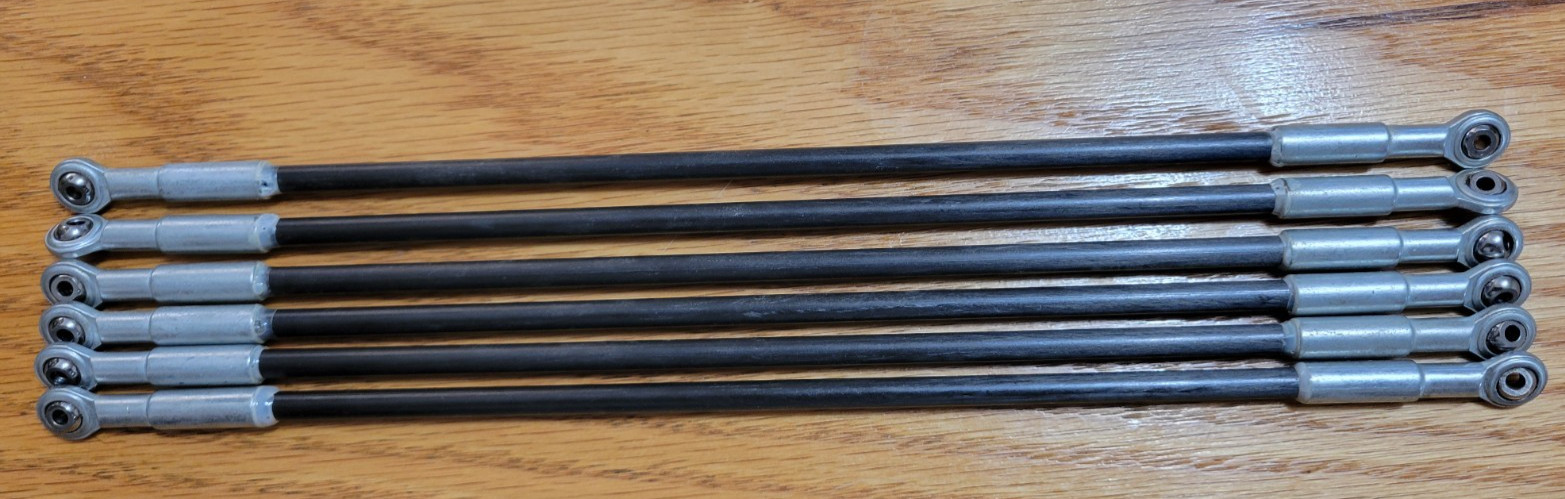
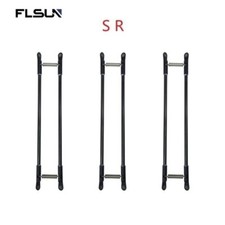
The FLSUN Parallel Arm Push Rod is a critical structural component used in FLSUN delta-style 3D printers like the QQ, QQ-S Pro, and Super Racer. Unlike Cartesian printers that move along fixed linear tracks, delta printers use three pairs of these identical rods to position the print head suspended in the center.Core Anatomy & Specifications
Rod Material: Constructed from hollow carbon fiber tubes to minimize weight while maintaining extreme rigidity against bending or flexing.
End Joints: Equipped with plastic or metal ball joints threaded or glued into both ends of the carbon tube.
Zero-Play Design: The joints use spring tension or tight tolerances to prevent mechanical play or backlash, which would cause severe ghosting and dimensional inaccuracies in prints.
Length Calibration and System Impact
Identical Sizing is Critical: All six push rods must be the exact same length down to a fraction of a millimeter. Even a minor variance in a single rod will cause the print head to tilt dynamically as it moves, leading to a warped first layer that auto-leveling cannot fix.
Delta Radius Math: The precise length of these rods is hardcoded directly into the printer firmware. The motherboard uses trigonometry to translate vertical tower movements into flat horizontal coordinate paths based entirely on this rod length variable.
Common Issues & Troubleshooting
Joint Wear: Over time, the ball joints can develop friction or physical slop. If you can wiggle the print head slightly up and down while the motors are locked, the rod joints are worn and must be replaced.
Delamination: Cracks or splits can form at the glue joints where the ball ends meet the carbon tubes, usually caused by a violent print head crash into the bed.