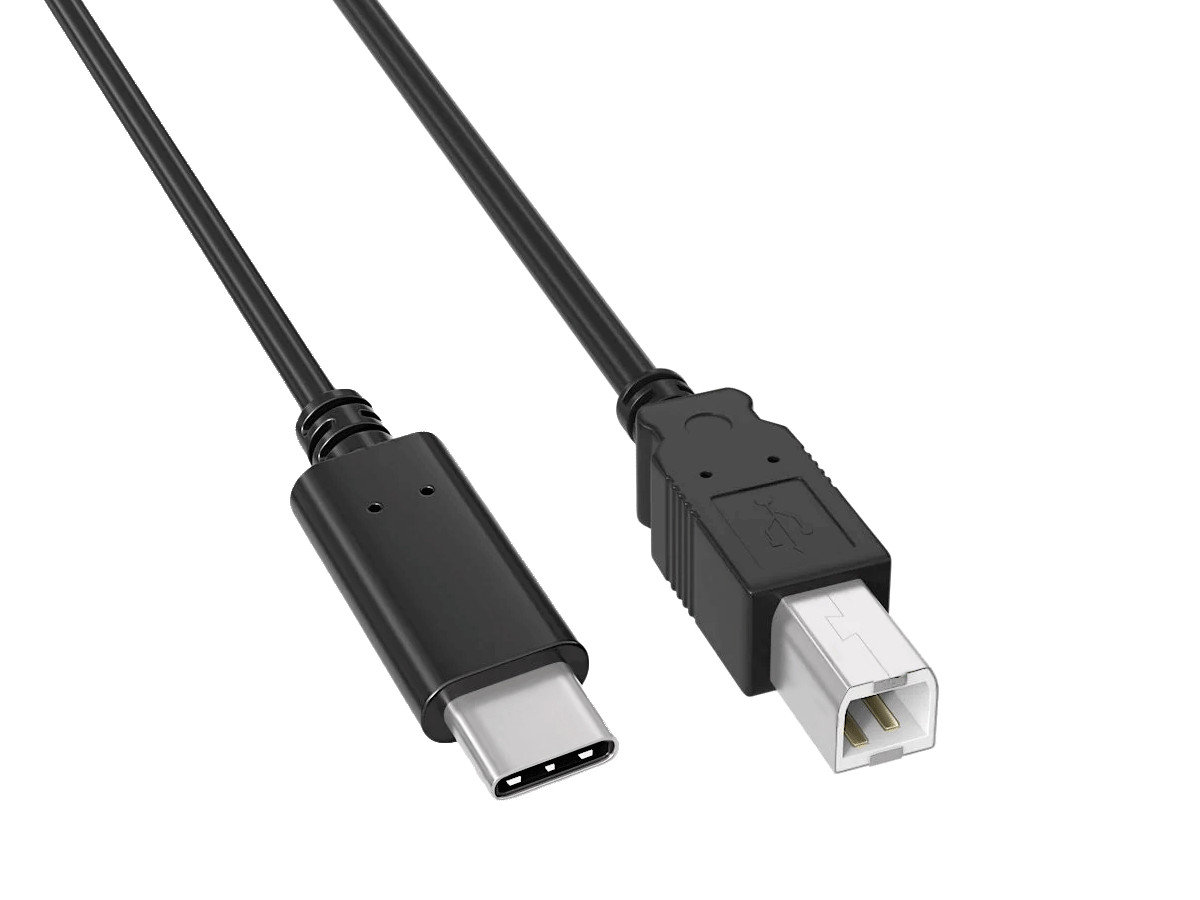
6ft High Speed USB 2.0 Cable Type C to Type B Male to Male Printer Cable, Shielded, Black
The USB 2.0 Type-C to Type-B Cable is an essential connectivity solution for bridging the gap between modern USB-C devices and legacy USB-B peripherals. This versatile cable enables seamless communication between your USB-C equipped computer and a wide array of devices, including printers, scanners, and fax machines, ensuring cross-generational compatibility in your tech ecosystem.
Engineered for optimal performance, this cable supports USB 2.0 standards with data transfer speeds of up to 480Mbps. This high-speed capability facilitates rapid file transfers and efficient data synchronization, often outpacing typical Wi-Fi connections. The cable's robust construction includes gold-plated connectors and a combination of foil and braided shielding, effectively minimizing signal degradation and protecting against electromagnetic interference.
Power delivery is another key feature of this cable, supporting up to 5V/2.4A charging. This capability ensures that your connected devices receive stable and quick charging while maintaining peak performance. The reversible USB-C connector design eliminates the frustration of incorrect insertions, allowing for effortless connections in any orientation.
Durability is at the forefront of this cable's design. The sturdy construction and quality materials ensure longevity, making it suitable for both office and home environments. Whether you're a professional managing multiple peripherals or a home user maintaining older hardware, this cable provides the reliability and versatility needed for seamless device integration.
Compatible with a broad spectrum of devices, from the latest USB-C laptops to legacy USB-B printers and scanners, this cable is an indispensable tool for maintaining productivity across various technology generations. Its ability to connect modern systems with established peripherals makes it an excellent choice for businesses, educational institutions, and individuals looking to maximize the utility of their existing hardware investments.