When you click on links to various merchants on this site and make a purchase, this can result in this site earning a commission. Affiliate programs and affiliations include, but are not limited to, the eBay Partner Network. When you click on links to various merchants on this site and make a purchase, this can result in this site earning a commission. Affiliate programs and affiliations include, but are not limited to, the eBay Partner Network.
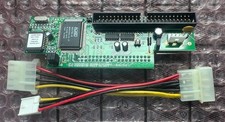
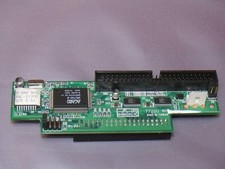
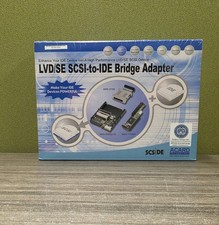
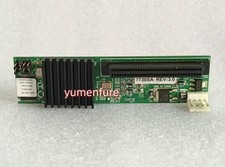
The ACARD AEC-7720U is a specialized hardware bridge that allows older 50-pin Ultra SCSI systems to use standard IDE/ATA and ATAPI devices. It was widely used in vintage workstations, servers, samplers, Macintosh systems, and industrial equipment where SCSI controllers were common but SCSI drives had become expensive or difficult to obtain. Overview The AEC-7720U acts as a SCSI target device on the SCSI bus while controlling a standard IDE device on the other side. To the host computer, the attached IDE drive appears to be a native SCSI device. No special drivers are normally required because the translation occurs entirely in hardware. Supported devices include: - IDE hard drives
- CD-ROM drives
- CD-R drives
- CD-RW drives
- DVD-ROM drives
- Other ATAPI optical drives
- Technical AEC-7720UFunctionUltra SCSI-to-IDE/ATAPI BridgeSCSI Interface50-pin Ultra SCSI (SCSI-3 compatible)IDE Interface40-pin ATA/IDESCSI Transfer RateUp to 20 MB/sec synchronousIDE Transfer ModesPIO 0-4, Multiword DMA 0-2, Ultra DMA 0-2IDE Transfer RateUp to 33.3 MB/sec (UDMA-2)SCSI IDsSelectable 0-7Firmware StorageOn-board Flash ROMControllerACARD RISC MicrocontrollerSupported DevicesIDE HDDs and ATAPI optical drivesDimensionsApproximately 120 × 35 × 24 mmOperating SystemsWindows 98/ME/NT/2000/XP, Windows Server 2003, Linux, Macintosh-compatible hardware environmentsPhysical ConnectionsSCSI Side
- 50-pin male Ultra SCSI connector
- Connects directly to a standard narrow SCSI ribbon cable
- Supports standard SCSI termination methods
- Selectable SCSI ID via jumpers
IDE Side- Standard 40-pin IDE connector
- Connects directly to an IDE hard drive or optical drive
- Requires standard drive power from the host system or enclosure
Key FeaturesHardware Protocol ConversionUnlike simple cable adapters, the AEC-7720U contains a dedicated ACARD processor that actively translates between SCSI and IDE protocols in real time. This is why it works where passive adapters cannot. Flash FirmwareThe onboard Flash ROM allows firmware upgrades, improving compatibility with newer IDE drives and optical devices. Full SCSI Target EmulationThe bridge presents the attached IDE device as a proper SCSI target, supporting standard SCSI commands and operation. ATAPI SupportOne of the reasons these adapters became popular was the ability to use inexpensive IDE CD-ROM and DVD-ROM drives on SCSI-only systems. Typical ApplicationsThe AEC-7720U was commonly used in: - Vintage Apple Macintosh systems
- Amiga computers
- Akai and Roland samplers
- Industrial control systems
- SCSI-based servers
- SCSI CD-ROM towers
- Legacy workstations from Sun, SGI, and HP (where compatible)
Advantages- Allows inexpensive IDE drives to replace expensive SCSI drives.
- No software drivers typically required.
- Supports both hard drives and optical drives.
- Improves availability of storage options for legacy SCSI systems.
- Firmware can be upgraded.
Limitations- Limited to Ultra SCSI (20 MB/sec maximum on the SCSI side).
- Designed primarily for narrow 50-pin SCSI systems.
- Large modern IDE drives may require updated firmware and may not always be fully recognized.
- Not intended for SATA drives without additional adapters.
- Becoming increasingly rare and collectible in the retro-computing community.
Why Collectors Want ThemThe AEC-7720U is highly sought after because it provides one of the most reliable ways to use modern-ish storage technology in legacy SCSI equipment. Many vintage computer enthusiasts regard ACARD bridges as among the most compatible SCSI-to-IDE solutions ever produced. Users in the retro-computing community frequently report long-term reliability, with some running them for decades in systems such as the Amiga 3000. If you'd like, I can also provide: - A jumper settings guide
- Installation instructions
- Maximum drive size limitations
 |
|